




 12/06/2025 - 20:33 PM

By Ghadir Abdallah Altayar
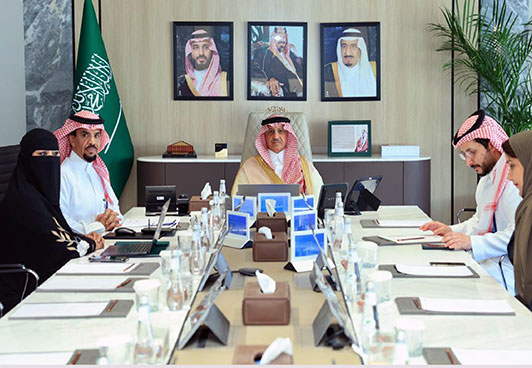
The International Forum for the Development of University Education Programs in Arab Countries witnessed one of its most pivotal and impactful sessions: the high-level ministerial session titled “The Future of University Education in Arab Countries.” The session brought together a distinguished group of ministers and senior officials from across the Arab world, with broad in-person and virtual participation from academic leaders, university presidents, experts, and policymakers.
Arab Reference Framework Takes Center Stage
The session opened with a presentation of the Arab Reference Framework for the Development of University Education Programs in Light of Future Skills and Professions, developed by the UNESCO Regional Center for Quality and Excellence in Education as part of a comprehensive regional research project. The framework was officially adopted during the 19th Conference of Arab Ministers of Higher Education and Scientific Research. Dr. Fatimah Al-Ruwais, Assistant Director-General of the Center, delivered the opening presentation, highlighting the framework’s key features and implementation pathways.

Strategic Themes and Forward-Looking Dialogue
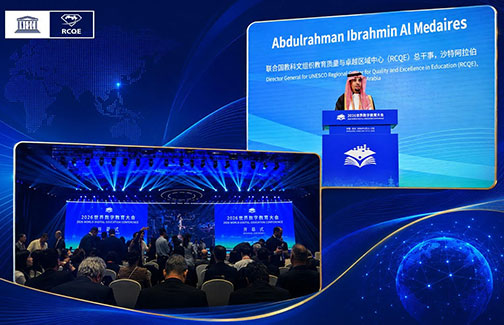
Moderated by Dr. Abdulrahman Al-Mudaires, Director-General of the Center, the session explored critical questions shaping the future of higher education, including:
- Future-readiness of university systems
- Alignment of academic programs with emerging skills and professions
- Integration of artificial intelligence in higher education
- Promotion of scientific research and innovation
- Sustainable financing of higher education
- Strengthening regional cooperation among Arab states
Ministerial Insights: A Comprehensive Vision for the Future
Ministers and senior representatives offered in-depth perspectives on the challenges and opportunities facing higher education in the Arab world:
-
Kingdom of Bahrain:
H.E. Dr. Mohammed bin Mubarak Juma, Minister of Education and Chairman of the Higher Education Council, emphasized integrating the reference framework into national higher education strategies and aligning academic programs with future skills and economic needs. -
Islamic Republic of Mauritania:
H.E. Dr. Yacoub Ould Amin, Minister of Higher Education and Scientific Research, highlighted the importance of transforming scientific research into innovative products that support sustainable development. -
Syrian Arab Republic:
H.E. Prof. Dr. Marwan Jamil Al-Halabi, Minister of Higher Education and Scientific Research, addressed funding challenges, graduate skill development, and policies linking academic programs to labor market demands. -
Islamic Republic of Mauritania – Vocational Training:
H.E. Dr. Mohamed Maa El-Ainin Oueih, Minister of Vocational Training, Traditional Industry, and Handicrafts, presented a forward-thinking vision for integrating traditional crafts into the national economy and aligning vocational training with the reference framework. -
Kingdom of Saudi Arabia:
H.E. Prof. Dr. Mohammed bin Yahya Mirdhi, Representative of the Minister of Education and President of the Saudi Electronic University, discussed the role of AI in program development and inclusive initiatives targeting students with special needs or economic challenges. -
State of Kuwait:
H.E. Dr. Jassem Al-Ali, Representative of the Minister of Higher Education and Scientific Research and Secretary-General of Public Universities, underscored the importance of national, regional, and global academic collaboration to address major challenges such as climate change and digital transformation. -
State of Qatar:
H.E. Dr. Hareb Mohammed Al-Jabri, Assistant Undersecretary for Education and Scientific Research and Representative of the Minister of Education and Higher Education, outlined readiness policies to equip graduates for future careers in line with Qatar National Vision 2030 and emphasized the role of the Arab Reference Framework in preparing universities for the future.
A Visionary Session Shaping Tomorrow
This high-level session showcased the active engagement of Arab decision-makers and offered constructive ministerial insights that reinforced regional integration, anticipated global shifts, and promoted the use of AI and digital transformation to build a flexible, innovative, and high-quality higher education system.
Broad Appreciation for Ministerial Contributions
At the session’s conclusion, participants from across the Arab world—both in person and online—expressed deep appreciation for the enriching ministerial contributions, affirming that this session marked a pivotal milestone in the ongoing development of higher education in the region.


Comments