


 11/12/2025 - 02:19 AM

Special Interview with Dr. Khodr Zaarour – Beirut Times Exclusive
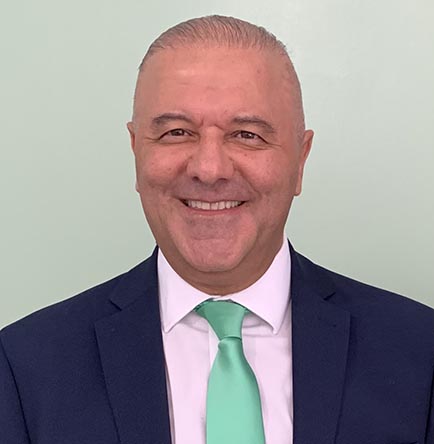
Dr. Khodr Zaarour is a teaching professor of political science and international relations at North Carolina State University, where he teaches courses in global politics, international development, terrorism, and American foreign policy. He holds multiple graduate degrees in public and international relations, political science, liberal studies, and history, with a specialized focus on international security and strategic studies, transnational crime, revolutionary movements, and Middle East politics.
Before joining academia, Dr. Zaarour served as a researcher and policy analyst at the National Defense University, where he worked on analyzing U.S. intelligence and security materials, organizing strategic conferences, and contributing to policy publications. His interdisciplinary expertise bridges theory and practice, making him a sought-after voice on issues of diplomacy, geopolitical risk, and regional transformation.
In this exclusive interview with Beirut Times, Dr. Zaarour reflects on the evolving dynamics of Middle East politics, the recalibration of U.S. foreign policy, and the strategic miscalculations that continue to shape global security. His insights offer a rare blend of academic depth and policy relevance, grounded in both field experience and scholarly rigor.
What personal background would you like to share with the readers of Beirut Times?
Growing up in a typical Lebanese multigenerational household, I've had the rare privilege of experiencing diverse perspectives on life from my extended family and neighbors. Although I emigrated from Lebanon in 1982, my family, friends and towns people taught me the importance of staying true to our cultural heritage and maintaining strong connections with the homeland.
Annual rituals like visiting Lebanon during the summer, preparing and enjoying traditional Lebanese meals, participating in various Lebanese celebrations, and listening to music and stories about my father’s journey to the United States during the great migration in the early 20th century always sparked my interests to learn more. The struggle that the Lebanese people faced during that humanitarian crisis between the two world wars and independence helped me appreciate the strength and resilience of my ancestors.
However, this cultural pride was not always something I cherished nor did I appreciate its significance in my early years. Quite the contrary, as a child growing up in America, I became a bit distant as modern gadgets or apps of communication were not always readily available. Therefore, I had to rely family and fellow Lebanese living in my area just to stay connected and discuss the precious times we had in the small mountainous town. It wasn't until family members and friends shared with me their own story of assimilation and how they strived to maintain their cultural identity in a new country that I realized the value of embracing my cultural heritage and identity. Inspired by their courage and dedication to preserve our important way of life, that I decided to educate myself about Lebanese history, traditions and joined cultural clubs in my city. Together with some fellow Lebanese, we explored our heritage by organizing potlucks, cultural presentations, and language exchange sessions. In 2022, I joined the Raleigh Sister Cities and became Raleigh’s Ambassador to my hometown of Syr, Daniyah in North Lebanon. Through this experience, I've learned that embracing who I am and the unique background where I came from has made me a stronger, diverse and proud person. My personal background has taught me to be open to learning and appreciating other cultures, which I always looked forward to sharing with friends and neighbors.
How would you describe your childhood and formative years?
My early childhood was absolute mind blowing, fascinating and full of adventure. Up until I was in fifth grade I lived in a small town in North Lebanon called Syr Daniayh. Life was “normal”, compared to war-torn areas of Lebanon. Then, my mother and I moved to Pittsburgh, Pennsylvania on April 10, 1982. Flying halfway across the world, my life was the opposite of everything I had known up to that date. The adventures I had during those formative years fall into the “you had to be there” category. Where else could you enjoy peace after escaping a war-torn country? But experiencing a new culture, music, sports, and way of life was a cultural shock to say the least.
To the best of my ability, I did experience an exciting new life in a new and strange land as I felt free to roam my newly adopted country exploring new activities. One of the best places was enjoying all of the exciting rides at Kennywood Park. White-water-rafting at Ohio Pile was unbelievable compared to the slow-moving current in the rugged rivers of North Lebanon.
Swimming in the fresh water at Mourine State Park was always enjoyable, relaxing and tranquil. Then, there was the ski resort of Seven Springs. I was living in Pittsburgh when I first experienced downhill skiing for the first time starting with the bunny hill to avoid hitting trees, large boulders and dangerous black diamonds. Additionally, I learned and played American football in high school and college and became and still am huge fan.
This is just a brief picture of my very unusual growing up years away from the motherland. To be honest, these where years were so far from the “norm” where friends wouldn’t even dream of them. But, after being away from Lebanon for 43 years, I thought that my cultural heritage has been lost forever. However, I became more Lebanese hanging to my childhood memories with the skin of my teeth and will never ever let go.
Where did you pursue your education, and what is your academic specialization?
When I immigrated to the US on April 10, 1982. I enrolled in the 7th grade at Greenway Middle School in Pittsburgh, Pennsylvania. After completing middle school, I started High School as a Freshman in 1984 at Brashear High School, also in the same city. Then, the family moved in 1985 to Houston, Texas where I started my sophomore year (second year in high school) at Robert E. Lee Senior High School where I graduated in 1988. Then, I took a year off and moved back to Pittsburgh in July 1989 and enrolled and graduated with an Associate Degree in social science from Allegheny College.
Then, in 1991, I transferred to Duquesne University (also in Pittsburgh, Pennsylvania) with a double major in Political Science and History graduating in 1993 with a Bachelor degree. That same year, I started my first Master’s degree in Liberal Studies and Political Science also at Duquesne University graduating in December 1994.
In 1996, I enrolled in a second Master’s degree in International Relations and International Security Studies at the University of Pittsburgh graduating in May 1998. As part of my studies, I served as an intern at National Defense University, the United States Information Agency and the Middle East Institute from 1998 until 2000 (all in Washington, DC). In 2014, I started my PhD at Virginia Polytechnic Institute and State University in Blacksburg, Virginia studying international relations with a focus on international security studies, American foreign policy and Middle East politics.
Since 2000, I started my teaching profession in American government, American foreign policy, American history, international relations, comparative politics, international law, international security studies, global politics, the Presidency and Congress, American political parties, Middle Eastern politics, third world politics and various political science and international relations at various colleges and universities. Additionally, I also published numerous book reviews, articles, chapters and books focusing on international relations, American foreign policy and Middle East politics. Furthermore, I formed and joined several civic, professional organizations and political organizations. As a major academic requirement, I have participated in many townhall meetings and panel discussions and conducted television, radio and newspaper interviews addressing the unfolding political and international issues of the day, from Washington to Beirut to Baghdad and Beijing.
In summary: I hold graduate degrees in public and international relations, political science, liberal studies and history with a focus on international security and strategic studies, transnational crime, revolutionary movements and terrorism, Middle East politics and American foreign policy. I am currently teaching political science, international relations, global politics, international studies, international development, terrorism and American foreign policy at North Carolina State University. I worked as a researcher and policy analyst at the National Defense University where he researched, analyzed, critiqued and evaluated U.S. intelligence and security material, coordinated, organized and moderated conferences and wrote articles and newsletters. I also taught at Virginia Polytechnic Institute and State University, Shaw University, North Carolina Central University, Hampton University and others. Additionally, I served as a regional desk officer at the United States Information Agency and academic educational researcher at the Middle East Institute. I am a member of the International Political Science Association, American Political Science Association, Southern Political Science Association, North Carolina Political Science Association, the Washington Institute for Near East Policy and the Council on Foreign Relations. I have written extensively on issues related to international relations, terrorism, the connections between domestic politics and American foreign policy, globalization and regionalism, Middle East politics and the relationship between democracy promotion, diplomacy and conflict-resolution and peace-building policy.
What challenges did you encounter during your studies, and how did you overcome them?
As an international student uprooted by war, the kinds of challenges I faced were numerous and varied on several levels. In addition to being burnt out, the hardest part for me was being torn apart where my heart was in Lebanon hoping for the war to end so I can return, and physically living in the US struggling to learn a new language, culture and way of life. But, in the back of my mind, it was just a waiting game, that sooner or later, returning to Lebanon was a matter of time, weeks or months but not years. Because of this torment, I felt less motivated and annoyed of how much time I was spending on studying knowing it would be to no use as my hometown was calling for me to return.
Another challenge for me as an international student was sometimes professors can be picky in their grading criteria; a system very different from I was used to in Lebanon. It is a challenge because you think you are going to do good in the assignment and when it gets graded, only notice that the professor didn’t like what you put on the paper, or she wanted something entirely different. You never know. It is better to do some research on the professors for the courses you are going to be taking so you won’t be surprised if they are picky with stuff or just totally tough professors.
Additionally, I spent more time thinking about my studies and how I was performing in school than studying. Although I tried to make weekly learning plans with my advisor, I did not stick to those plans. I did not find the learning content engaging and interesting and was hoping that the professors would make it more interesting and exciting. Often, I did not find many opportunities to learn in interesting ways such as hands-on learning or simulations.
Finally, there were several language and cultural barriers which took a while to overcome. Using a dictionary was not much help either. The best option was to immerse myself in the local community, engage neighbors, friends and classmates. This helped me to improve my skills and put me on the fast-track to integration in the larger American society, but always managed to maintain my cultural heritage.
Could you reflect on the pivotal moments that shaped your academic journey and political interests, particularly your early engagement with Lebanese and Middle Eastern affairs?
Early in my educational years I focused exclusively on American politics and history especially after being encouraged to memorize the Gettysburg Address in eighth grade. However, there were several major events that helped me broaden my educational scope to the outside world. As a second-year college student in 1990, Iraq invaded Kuwait which led to antiwar movement across American cities and university campuses. Due to my opposition to the Desert Storm and the militant American response, I joined several protests. Shortly after the war ended with the defeat of the Iraqi forces, I ran and was elected as the president of Young Republicans at Duquesne University and started to become more politically active.
Second, the suffering of the Iraqi people due to the United Nations economic sanctions, I started lobbying members of Congress and participated in panel discussions to help end those punishing and inhumane economic sanctions. Although I was unsuccessful in removing the sanctions, I felt empowered and determined to stand up for universal justice and human rights which continue until today.
Third, the second Intifada that began in 2000 gave me more reasons to become active. After seeing the oppression of the Palestinian people, I developed further reasons to stand up and speak up against the occupation and the forced displacement of people from their own land.
Fourth, the attacks of September 11, 2001, put my community under the microscope and needed to elevate my political and social activism. I started a lobbying group called MAPAC in Raleigh, North Carolina with the mission to empower and lobby my community. This organization provided me with an effective forum and greater opportunity to be more engaging in civil and political discourse. The organization allowed me to lobby the political establishment and collaborate with various organizations for common goals.
The next major event that increased my political activism started in 2003 with the US invasion and occupation of Iraq. In fact, I wrote my PhD dissertation and later book about Iraq. I have organized and participated in several demonstrations, panel discussions and lobbying days on the state and national levels to end the war. Anti-war members of Congress were supportive as the war dragged on without achieving any major goals.
Finally, and perhaps most importantly was the assassination of Lebanon’s Prime Minister Rafiq Hariri and other Lebanese politicians in 2005 and the Hezbollah-Israeli War in 2006. Although Lebanon was not on my political radar at the time, I joined several organizations to protest and lobby to end the onslaught and the destruction of Lebanon. Along with several friends, I was successful in raising a sizeable amount of money for the Lebanese Red Cross. This was the turning point for me to start focusing on Lebanon’s political, social and economic development. Since the 2019 crisis, I joined and established several organizations to help Lebanon.
How has your experience teaching and conducting research in American institutions influenced your views on diplomacy and global security?
Scholars especially in the social sciences have to navigate carefully in American institutions of higher learning. Students, faculty and staff hold diverse and opposing views could turn into a chaotic and contentious environment. Additionally, faculty are always under scrutiny by the media and politicians where they are always looking for controversial statements, positions and events that we are involved in. Hence, as long as we are fair, balanced and accurate our professions tend to be successful and academically rewarding. The name of the game is to avoid controversies and stick to the data at hand to defend my points of view with supporting evidence. In order to counter the opposite point of view, I always had to arm myself with the logic, knowledge of the issue and data. To position myself as a scholar, I had to always be prepared, organized and pay attention to the details of both sides of the argument. Otherwise, defending a weak position is not only counterproductive but also dangerous and unprofessional.
As a scholar with Lebanese roots and a career in the United States, how do you navigate the intersection of identity, scholarship, and advocacy?
Being in academia puts me in a difficult position because. I have to constantly balance my identity, advocacy and scholarship. What allows me to maintain a successful balance is the ability to convey the reality of the external world in accurate way not only the existence of my mind but, the existence of the past. I would have to depict the issues at hand as close to reality as possible or risk being biased or losing my academic credibility. With today’s technology, information is readily available, and students and faculty will challenge me to explain some of my points of view or political position. My policy is to demonstrate my intellectual honesty and transparency to help the students assess the validity and credibility of my lectures, presentations and scholarship. When I am to be fact-check, that would reduce the chance of biases and increase credibility.
In your opinion, what are the most urgent political reforms Lebanon needs today to rebuild public trust and institutional resilience?
The Lebanese political establishment needs major reforms as it lost most of its credibility and legitimacy. First, there has to be economic reform. Since 2019, millions of Lebanese have been experiencing severe financial hardship due to their country’s liquidity shortages. The full extent of the fragility of Lebanon’s economy were concealed through unethical financial engineering by the governor of the central bank with the guidance, support and protection of corrupt politicians.
The Lebanese currency (Lira) was devalued by over 98% between January 2023 and March 2024, with an annual inflation rate of 221.3% in 2023. Lebanon’s collapse is of unprecedented magnitude relative to its economy. The crisis combines a foreign debt default, a currency devaluation and banking sector bankruptcy unseen since the 19th century, according to the World Bank. More than an economic collapse, its consequences are threatening the survival of the country as we know it is causing major suffering among the Lebanese people.
Furthermore, Lebanon’s debt is unrecoverable, and hence, the political establishment used their citizens’ funds in their bank accounts to pay off the debt. The resulting effect was a total collapse of trust in the financial sector and the disruption of the payment systems. At the center of the power structure, we find a dominant banking sector so controlled which threaten the survival of the state diminishing any chance of the people living without access to their own funds.
Faced with a snowballing trend of deposit withdrawals and in anticipation of a full-blown bank-run Lebanese banks took unilateral measures at the end of 2019, severely restricting access to customers’ deposits in US dollars at the official rate of 1507, establishing de facto capital control and effectively breaking the fixed exchange rate. All these actions were imposed outside of any legal or constitutional framework causing suffering which prevents them from purchasing basic items such as food, medicine, utilities, etcetera.
Secondly, there must be accountability and transparency by the political class. Most of the leadership have been operating above the law and empowering their own followers by committing financial fraud, violent and other crimes and hence marginalizing the rest of the Lebanese population. Perhaps term-limits and enforcing transparency and holding politicians accountable could help stabilize a fluid and deliberately corrupt system of government.
Third, government and corporate employees must be trained in public service. Most employees who are well-connected to the political establishment cheat the system and the Lebanese tax-payers by not putting the work hours and quality of work at their jobs. As a result, the Lebanese people suffer by experiencing terrible service reducing their trust in their public officials. Hence, an office of accountability must be established.
Fourth, with all of the high corruption cases in such a small country, no one is ever held accountable. In order to deter future abuse of power, public officials must be disciplined and pay for their behaviors that negatively affect or scam the Lebanese public. An accountability office will help send a strong warning to officials with the intention of fleecing the republic and its already frustrated population.
How do you evaluate the influence of regional powers on Lebanon’s internal dynamics — and what strategic missteps have hindered progress?
It is no surprise that the influence of regional powers on Lebanon's internal dynamics is extensive and pervasive, primarily evaluated through their support for internal political factions and armed militias, turning this tiny country into an arena for their proxy rivalries and putting diverse communities against each other. This external influence exacerbates Lebanon's existing fragile sectarian divisions and greatly contributes significantly to political paralysis, economic instability and social divisions.
Throughout its long history, key regional powers and their Influence have influenced Lebanon’s domestic and foreign policy decisions including Iran, Syria, France, Saudi Arabia, Israel, Egypt, and the United States. Since the early 1980s, most would argue that Iran has been the most influential external player through its long-standing and substantial support for the Shi'a movement Hezbollah. For instance, Iran as well as Syria and Israel have used Lebanon to carry out their proxy wars.
Hezbollah serves as Iran's primary proxy in Lebanon, receiving financial, military, a large arsenal of rockets and missiles, and ideological, diplomatic and political support. It is through Hezbollah that Tehran exerts significant influence and even power over Lebanese governance and decisions. Iran manipulates the Lebanese political establishment and often leverages the group's political power and veto power within the cabinet to shape or block government decisions, including presidential elections and national budgets. Furthermore, with Iran’s support Hezbollah efforts in operating a vast and effective social welfare network that cultivates loyalty among the Shi'a population, effectively creating a "state within a state" that is often referred to in Lebanon as the group is shown to be more efficient than the central government, and hence further entrenching Iranian influence and lessening reliance on state institutions. By weakening the Lebanese, Iran emerged as the dominate player in the country’s politics.
Saudi Arabia on the other hand and in direct competition with Iran’s influence has historically served as the key patron for Lebanon's Sunni community, particularly the Future Movement led by al-Hariri family. Through generous financial aid, Saudi influence has primarily been exerted through financial and development aid, intended to stabilize the economy and counter Iranian influence. At the same time, however, Saudi engagement with Lebanon has been less consistent than Iran's and has at times waned due to frustration with Hezbollah's dominance and political paralysis in Lebanon. In the last two years, Saudi Arabia has reasserted itself as Iran was driven out of Syria and a much weaker Hezbollah after its war with Israel.
As Lebanon’s closest neighbor, Syria has historically played a critical role in Lebanese politics, including a nearly 30-year military presence that ended in 2005 after its role in the assassination of Prime Minister Rafiq al-Hariri. With Hezbollah and Amal, strategic alliance with both groups Syria established an enduring alliance, facilitating the transfer of weapons from Iran to Hezbollah via Syria and Iraq. Since Syria shares a long border and history, Damascus effectively controlled Lebanon’s political maneuvering as it was able to bring Lebanon under just about complete control. Hence, it is safe to say that through its long history of occupying Lebanon, Syria’s influence has shaped Lebanon's political landscape, including supporting specific factions and influencing the post-civil war political structure.
All of the regional and international powers have had negative consequences on this tiny nation-state by used sectarian divisions to exploit Lebanon's consociationalism, power-sharing political system, which divides authority along religious lines, by backing their respective sectarian allies. This intensifies internal divisions and makes cross-sectarian consensus difficult to achieve. In fact, such foreign interference and rivalries have frequently created political paralysis, factionalism and divisions instead of the Lebanese political parties focusing on aligning themselves under a unified national interest. Hence, this prolonged presidential vacuums, weak governments and the failure to implement essential economic and political reforms. Furthermore, such interference and competition among the international and regional players not only harmed the political process but had a negative economic impact including economic decline, financial crisis, devalue of the Lira and weak economic development and low output.
Additionally, the presence of these external powerful states especially Iran which was responsible for the arming of groups like Hezbollah for instance have highjacked the Lebanese state. The group with the blessing of Tehran successfully operated outside the control of the government and posed a constant threat to national stability. Hezbollah’s involvement in various wars especially in the Syrian, Yemeni and Iraqi civil wars has tarnished the image and weaken the international position of Lebanon. But the most destructive in these regional conflicts was Hezbollah’s conflict with Israel where Tel Aviv has reoccupied a portion of Southern Lebanon. In essence, regional power influence in Lebanon acts as a major destabilizing force, transforming the country into a proxy battleground and preventing the emergence of a strong, sovereign state capable of prioritizing its own national interests over those of its external patrons.
What is your outlook on the future of Lebanese sovereignty amid ongoing economic challenges and external pressures?
Based on the troubling events in Lebanon, the Lebanese sovereignty is precarious as best, as the state's capacity is significantly undermined by a prolonged economic depression, a severe internal governance crisis, substantial external pressures and the war with Israel and the pressure on the Lebanese government to disarm Hezbollah. Indeed, Lebanon as a fragile state, with limited ability to exercise a monopoly on force, internal divisions, and economic collapse, implementing nationwide reforms have been heavily compromised.
Among the first major challenges is the presidential vacuum Lebanese has faced since 2005. Operating in a presidential vacuum three times since the 2005, Lebanon has been operating in a caretaker capacity allowing Hezbollah to operate freely and negotiate agreements on behalf of the government. This shows a major loss to Lebanon’s sovereignty and a weakness in dealing with the world. This political paralysis has certainly stifled the government's ability to implement essential reforms or respond effectively to crises internally and externally.
The weakness of the Lebanese government was unable to manage the economic collapse of 2019 which was considered the worst economic downtown in modern history. Its inaction not only led to financial meltdown but caused major interruption of basic services including electricity, water, healthcare, major inflation, soaring poverty rates and drastically diminishing public trust in its institutions. Even more depressing is that Lebanese depositors have no access to their bank accounts to withdraw their funds leading to further economic depression.
It may not be fair to totally point the finger at the ineffective government because, non-state actors most importantly Hezbollah operates as a “state within a state.” The group controlled the banking sectors, Rafiq Hariri International Airport, ports, judiciary, security forces and all international border crossings with Syria. Additionally, the group had direct control with Lebanon’s vast security apparatus where the government was too weak to challenge Hezbollah’s control and reclaim its sovereignty. Hence, these institutional weakness due to group’s interference, are behind corruption and instability.
Other challenges to Lebanon’s sovereignty are the regional conflicts between Hezbollah and Isarel. Even though there was an agreed upon ceasefire, there is immense pressure on the Lebanese government to disarm Hezbollah. This is a dangerous situation pitting the group against an already fragile state on the verge of being a failed state. Hezbollah’s war with Israel has resulted in billions of dollars in economic and physical damages to the country and an occupation of several locations of southern Lebanon. Despite the declared ceasefire, renewed increased hostilities remain high and could resume at any moment.
In order to put Lebanon on the path of successful recovery, international organizations especially the International Monetary Fund has made future assistance for Lebanon contingent on that country’s economic reforms and accountability. As such, such demanded reforms have not only stalled but also led to political infighting and entrenched sectarian interests perpetuating the crisis and making the country more reliant on external aid and influence. With such geopolitical rivalries, Lebanon is likely to remain a proxy battleground for regional powers, with countries like Iran supporting Hezbollah, while the US and France support state institutions like the Lebanese Armed Forces. This external influence further complicates internal decision making and the pursuit of purely national interests.
In a nutshell, the future of Lebanon’s sovereignty and territorial integrity is at a dangerous crossroads that threatens the fabric of Lebanese society. Without a political consensus among its political leaders to implement rapid and meaningful reforms, address corruption, and assert the state's authority across its territory, the Lebanese state risks being sidelined and remaining mired in a perpetual crisis and possible disintegration. Although a formal division of Lebanon is highly unlikely, true state sovereignty will remain severely constrained by the combined weight of economic collapse and powerful non-state and external actors.
How would you assess the evolution of U.S. foreign policy in the Middle East over the past two decades, especially regarding Lebanon, Syria, and Iran?
American foreign policy in the Middle East shows since the early 2000s is seen in a rather negative light. With inconsistencies, fragmentation, and contradictions, the US has been unable to implement a positive change on the Israel-Palestine track, contain Iran’s aggressive behaviors, or maintain the American diplomatic tradition that previously allowed the U.S. to gain well-grounded political, economic, military, and diplomatic leverages in the region. Under the last several administrations from George W. Bush to Trump’s second term, America’s vital interests were in a precarious position at best which allowed Iran, Russia, and China to pose a serious challenge to American hegemony. Although its influence has been weakened as a dominant power, the U.S. remains the most influential power in the Middle East. However, due to its inconsistencies and double standards, these presidents lacked a long-term vision, and major foreign policy expertise or knowledge of the region. Needless to say, their policies mostly failed due to a disorganized or clear strategy and unpredictability which made the situation in the Middle East dangerously chaotic and counter-productive to American strategic interests.
Aside from the chaos, American foreign policy towards the Middle East since 2001 has primarily focused on promoting democracy and counterterrorism but, no real progress on either track except more chaos. Some of the general trends in the early 2000s started with direct military intervention under George W. Bush to retrenchment by Obama as he pivoted to Asia. Then, President Trump moved to great power competition with rising China’s influence and interests in the region. The focus by Trump is on reaching economic deals and handing over security concerns to partners in the region.
Regarding Lebanon, Syria, Palestine, Yemen and Iran, key trends include a shift from hands off to direct intervention attempts to manage these issues that seem to threaten American interests. From the outside, it seems that Israel is the kingmaker of U.S. foreign policy in the Middle East. To outsiders, targeting Iranian influence via proxies, reaching agreements behind closed doors with Syria’s new government and the Houthis in Yemen these decisions seem to clear to protect Isarel’s continued its uncontained wars on these countries.
So, the U.S. foreign policy in the Middle East moved drastically from bypassing the region to maximum pressure using economic sanctions and direct military attacks. American foreign policy toward Iran has been the most volatile, driven by concerns over its nuclear program and its extensive support for proxies throughout the region and its 12 day war with Isarel, the Trump Administration bombed Iran’s nuclear facilities. Tensions are running high as frequent attacks between American forces and Iran’s proxy militias. With the U.S. withdrawing from nuclear agreement and Trump’s maximum pressure of punishing economic sanctions on Iran, the situation is complex, dangerous and unpredictable and the fighting could resume at any moment between Washington and Tel Aviv on the one hand and Tehran on the other if a new nuclear deal is not reached.
The U.S. foreign policy establishment has consistently aimed to preserve Lebanon’s sovereignty, independence, and territorial integrity, and largely supported the Lebanese Armed Forces to balance against Iran's proxy, Hezbollah. Also, under the Administration of Geroge W. Bush, the U.S. along with France and other countries strongly supported the Cedar Revolution (2005) to compel Syrian troops to withdraw from Lebanon after the assassination of former PM Rafic Hariri. Additionally, the U.S. policy supported the implementation of UN Security Council Resolution 1701 ending the Hezbollah-Israel war in 2006 which demanded Hezbollah to disarm has been largely unsuccessful leading to the current challenge and political gridlock. Hence, the U.S. has been increasing its rhetoric to disarm Hezbollah and major reforms and ending corruption in return for financial assistance.
What strategic miscalculations do you believe have shaped American engagement in the region — and what lessons should policymakers consider moving forward?
The U.S. major strategic miscalculations in its Middle Eastern foreign policy have centered over commitment to Israeli security without finding a permanent resolution, over extension of security arrangements, balancing conflicting strategies, over-reliance on military force, a poor understanding of local political and social dynamics, and a lack of consistent, long term diplomatic strategy. In addition to poor planning, over-reliance on military force as the first option and often only option has often backfired and did not achieve the major objectives. Dealing with complex political and social problems requires skilled diplomats, patience and understanding of the local cultures and the military option has proven ill-suited making conflicts drag on longer than expected and further aggravating the situation on the ground leading to dysfunction governance as the situation in Iraq and Afghanistan testifies.
The U.S. foreign policy makers’ occasional shifts between allies and commitments have produced a loss of credibility and reliability as these shifts shows inconsistencies and unpredictability. American partners in the region are looking towards China and even Russia. Additionally, the policymakers seem to focus on winning a quick victory without focusing on long-term stability. Picking up and leaving after the guns fall silent does not produce the stability the locals were expecting and desiring. The Israeli bombing of Qatar by Israel in the summer for instance exposed this hypocrisy where Washington cannot protect one ally from another. Hence, the Arabian Gulf states are re-thinking their policies and partnerships with DC. Unless and until lessons are learned by policymakers, miscalculations are likely to continue.
Do you observe a shift in Washington’s priorities toward the Arab world, and how might this impact regional diplomacy and stability?
Certainly, we are witnessing a significant shift in Washington’s priorities, moving toward a more "America First" emphases in it’s foreign to compete with China’s rise using military power if and when needed. While President Obama shifted America’s attention to growing Asia, President Trump has shifted his attention to a renewed alignment with the Arabian Gulf especially the United Arab Emeritus, Qatar and Saudi Arabia as a new major front against growing China. The current White House is using diplomacy, economic ties, investments burden sharing and joint problem-solving mechanisms to cement Washington’s relations to end conflicts in the region. This new American foreign policy strategy is designed to produce stability and empower fragile states.
How do you interpret the changing nature of terrorism and non-state actors in the Middle East, and what policy responses do you find most effective?
As the nature of terrorist groups have significantly evolved from a centralized hierarchical posture to a smaller fragmented groups that requires governments and coalitions to adjust in their policy responses to combat these new challenges. Increased collaboration, cooperation and intelligence sharing must increase to deter and eliminate these groups. Without major adjustments in their policies, the U.S. and its local partners may be squandering much needed resources to empower these groups. Additionally, the policy should be multi-faceted relying not only on military response but economic, social and political as well. Furthermore, addressing the root causes of terrorism is paramount because without government reforms, such groups will not only increase but will gain public support. Finally, states must strengthen its institutions and provide public services to all of its citizens. Hence, a newly devised strategy should be developed to undermine and thwart these groups.
What role should international institutions play in countering extremism while safeguarding civil liberties and national sovereignty?
Over the years, I’ve learned that international institutions play a critical role in shaping and setting international norms. They provide critical information, intelligence and capacity building, and coordinate global efforts to address and solve common problems in finding common and agreed upon solutions that make sense. These activities are done through cooperation and coordination, all while ensuring member states adhere to human rights and civil liberties. They must balance counter-extremism measures with protecting fundamental freedoms, avoiding actions that could be used to repress legitimate grievances. At the same time, these institutions will help to strengthen member states' legal frameworks to uphold the basic rights of its citizens. Setting up international and agreed upon standards help to include all of interested parties without prejudice or marginalizing others. Such institutions provide the platform for those concerned to express their concerns in a peaceful manner and avoid violent revolts.
What message would you offer to young scholars and aspiring diplomats seeking to engage in global challenges while remaining grounded in ethical responsibility?
According to my experiences over the years, I advise young scholars and potentially aspiring diplomats. The core message is that effective and ethical engagement with global challenges requires balancing national interests with universal values, all while cultivating a deep sense of empathy, integrity, and a commitment to peaceful, collaborative dialogue. All of the work in the fields of academia and diplomacy require individuals to embrace active listening and respect diverse perspectives. True understanding is impossible without hearing other people's perspectives, especially opinions you may disagree with. Listen at least twice as much as you speak and don’t assume anything if you are uncertain. Be genuinely curious and ask questions to understand the full context of the situation at hand. This fosters mutual respect, and increases your credibility as it is vital for building trust and community in international forums.
Secondly, individuals working in these sensitive fields of public relations must prioritize integrity and accountability. Always act with integrity and honesty in all your interactions with others, especially in diverse settings. Your credibility is your most asset so don’t abuse it. Be accountable for your actions, both to your own principles and to the communities you serve. Upholding ethical standards ensures legitimacy and long-term success. Keep in mind that you represent your country so seek knowledge when needed and don’t just come to conclusions. Diplomacy after all is a blend of art and science and mastering it will give you the advantage in conversations and diffuse tense situations. Continuously deepen your understanding of international relations, history, politics, and different cultures. Knowledge of the cultural, social, and economic contexts of various nations is essential for navigating complex issues and developing relevant, effective strategies.
Third, as a diplomat, you must be articulate in your negotiation skills because resolving disputes requires a healthy dialogue in order to reach a compromise, not coercion or conflict. The focus must be on building and maintaining relationships and finding common ground to advance shared interests, values and norms. Of course, this requires a lot of patience to achieve consensus in a respectful non-threatening manner. With the ever-evolving global political arena, always be ready to adapt and be resilient to tackle newly emerging challenges under pressure of the new challenges.
Finally, but most importantly, we are humans so, never forget the human element inherent in all of us as the heart and soul of diplomacy. In this field, we are always dealing with fellow human beings and always be a strong advocate for human dignity and human rights to gain respect and maintain our integrity.
As a reminder, be humble in your policy making decisions and maintain your commitment to the global common good and universal justice. Keep in mind that there is no “I” in teams so, collaboration is the keystone of international diplomacy and to maintain solid engagement as you make meaningful contributions to global peace, cooperation and human development in the diplomacy.


Comments